Roger McGuinn’s twelve-string Rickenbacker on “Mr. Tambourine Man” is the literal sonic origin of jangle-pop — the bright, ringing, sustained guitar sound that every Byrds-descended band (R.E.M., The Stone Roses, The Smiths, Real Estate, Beat Happening) traces some portion of their approach back to. McGuinn arrived at the sound partly by accident — the twelve-string Rickenbacker was not a standard folk instrument — and it became one of the most-replicated timbres in the following fifty years.
The album is also the record that bridged folk and rock, and the argument that persuaded Dylan to go electric. The four Dylan covers alongside Pete Seeger’s “The Bells of Rhymney” and three originals established that folk material could be played with electricity without losing its quality — the case Dylan then made at Newport a few months later, more controversially. The Byrds made the case first, in this studio, with this twelve-string.
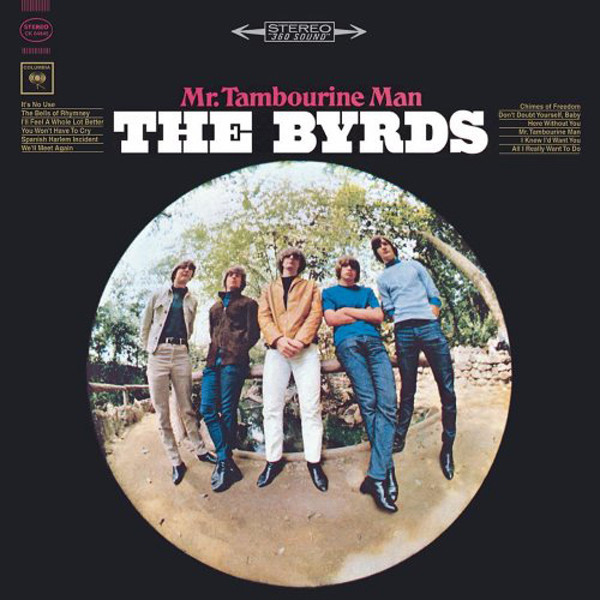
Roger McGuinn’s twelve-string Rickenbacker on “Mr. Tambourine Man” is the literal sonic origin of jangle-pop — the bright, ringing, sustained guitar sound that every Byrds-descended band (R.E.M., The Stone Roses, The Smiths, Real Estate, Beat Happening) traces some portion of their approach back to. McGuinn arrived at the sound partly by accident — the twelve-string Rickenbacker was not a standard folk instrument — and it became one of the most-replicated timbres in the following fifty years.
The album is also the record that bridged folk and rock, and the argument that persuaded Dylan to go electric. The four Dylan covers alongside Pete Seeger’s “The Bells of Rhymney” and three originals established that folk material could be played with electricity without losing its quality — the case Dylan then made at Newport a few months later, more controversially. The Byrds made the case first, in this studio, with this twelve-string.