
Plastikman
Musik
- Released
- 2002
- Format
- Vinyl, 12", 33 ⅓ RPM, Album, Reissue, Remastered
- Label
- Plus 8 Records · PLUS8043R
- Rating
- 9/10
Related titles
-
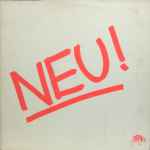 Neu! Neu! Neu!'s motorik pulse is the ancestor of everything Hawtin stripped down to — the same metronomic logic, different gear.
 -
 Jeff Mills The Extremist Jeff Mills and Hawtin came up through overlapping scenes — both shaped by Detroit, both eventually gravitating toward Tresor and the Berlin axis.
 -
 The Detroit Escalator Company (Excerpts) Detroit Escalator Co. and Plastikman are two different ways of processing the same geography — one from the inside of the scene, one from across the river.
 -
 Barem Never Better Than Late Barem was one of Hawtin's hand-picked M_nus signings — an Argentine producer absorbing the minimal discipline Plastikman established and applying it from a different city.
 -
 Ambivalent R U OK Ambivalent is the New York node in Hawtin's roster, a Berghain regular who came to M_nus when the label was at its most precisely minimal.
 -
 False River Camping False (Davide Squillace) rounds out the M_nus trio — an Italian producer whose warmth sits slightly outside the Plastikman template but inside the same label logic.
Richie Hawtin’s father was a robotics engineer for General Motors in Windsor, Ontario, who introduced his son to Kraftwerk and Tangerine Dream — a detail that explains a great deal about what followed. Hawtin grew up across the river from Detroit — close enough to pick up Detroit radio, close enough that the geography made him belong to both cities before he chose either. He co-founded Plus 8 with John Acquaviva in 1990, named after a turntable’s pitch adjust. The label name is a precise detail: everything at Plus 8 ran slightly faster than the world expected.
Musik appeared in 2002, a year after the Plus 8 ten-year anniversary box, and it is the dub-inflected successor to Consumed (1998) — already the most austere thing Hawtin had released under the Plastikman name. The low-register pulses here push further into negative space than anything before it. It is the record that answers the question implied by the whole project: what is left when you remove everything that is not the pulse? The answer, it turns out, is quite a lot.
The structural logic is the son finishing the project the father seeded — German minimalism run through American industrial geography, then passed back to Europe. Hawtin moved to Berlin in 2003, the year after this was released. The move makes a certain kind of sense.