
Ólafur Arnalds & Nils Frahm
Trance Frendz - An Evening With Ólafur Arnalds And Nils Frahm
- Released
- 2016
- Format
- Vinyl, LP, Album
- Label
- Erased Tapes Records · ERATP081LP
Related titles
-
 Kiasmos Kiasmos Kiasmos is Arnalds' other collaboration — with Rasmussen instead of Frahm, structured minimal techno instead of improvised piano, but the same impulse toward patient, reduced music.
 -
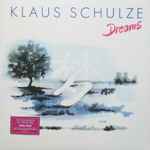 Klaus Schulze Dreams Klaus Schulze's Dreams shares the long-form, evolving synthesizer aesthetic that Frahm channels through his Funkhaus studio — Berlin School electronics, four decades apart.
 -
 cv313 & Mike Huckaby Our Life With The Wave CV313 and Huckaby's dub techno uses space, reverb, and delay as structural elements the same way Frahm uses room acoustics and tape degradation — creating depth through signal processing.
On July 28, 2015, Arnalds visited Nils Frahm at Durton Studio in Berlin. The original plan was to film a short promotional clip for their Collaborative Works compilation. Instead of playing old material, they started improvising and never stopped. Between 8pm and 4am — eight hours, no overdubs, no edits — seven new pieces emerged. Alexander Schneider filmed the session, producing a 45-minute documentary alongside the album. Each track is titled by the time it was recorded: 20:17, 21:05, 23:17. A diary written in real time.
Frahm studied classical piano under Nahum Brodsky, a student of a student of Tchaikovsky — a direct pedagogical line back to the Russian Romantic tradition. His father Klaus designed covers for ECM Records, giving him early exposure to the label that defined a certain austere, spacious aesthetic in jazz and classical music. Rather than pursue an orchestral career, Frahm moved to Berlin in 2006 as a studio technician. His breakthrough came with Felt (2011), made by placing felt on the piano hammers — a physical intervention that defined his signature muffled, intimate sound.
His current studio is Saal 3 at Funkhaus Berlin, a former East German state broadcasting complex. He spent years rebuilding the room from the cabling up, assembling a custom mixing desk from Neumann faders and filling the space with Moog Taurus synths, a Roland Juno-60, a Mellotron, and a pipe organ he built from scratch — all alongside grand pianos. The fact that a chamber music recording room now contains this equipment says something about the post-classical project in miniature. This is the fifth Arnalds-Frahm collaboration, and the pattern is always the same: two friends in a room with instruments, usually in Berlin, with minimal planning. Frahm’s description is the clearest: “Everything that we put out is basically just a byproduct of us spending time together.”