
Gabor Szabo
Rambler
- Released
- 1974
- Format
- Vinyl, LP, Album, Stereo
- Label
- CTI Records · CTI 6035
Related titles
-
 Grant Green Idle Moments Grant Green and Gabor Szabo are both in the crate-digger's jazz guitar canon — both on labels (Blue Note, CTI) that hip-hop producers were systematically working through.
 -
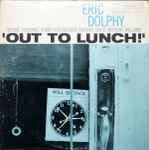 Eric Dolphy Out To Lunch! CTI and Blue Note are the two labels the jazz sample bin is built from — Szabo on CTI, Dolphy on Blue Note, both part of the same archive that producers were digging through in the early '90s.
 -
 Guru Jazzmatazz (Volume 1) Jazzmatazz recruits from this exact pool — Roy Ayers (who covered Szabo's compositions) appears on both Jazzmatazz and in the orbit of the CTI catalogue that Szabo recorded for.
Gabor Szabo fled Budapest after the 1956 Hungarian uprising and ended up in Los Angeles, where his guitar style — modal, fingerpicked, with Hungarian gypsy ornamentation and pentatonic scales — became one of the most distinctive sounds in late-’60s and early-’70s jazz. Carlos Santana has cited Szabo as his single biggest guitar influence: the “Gypsy Queen” outro of “Black Magic Woman” is literally a Szabo composition, directly lifted.
Rambler (1974) is on CTI — Creed Taylor’s label, which invented the “lush 1970s jazz” sound (Bob James, Don Sebesky arrangements, the whole aesthetic). CTI alongside Blue Note are the canonical crate-digger labels: the records that Native Tongues producers were working through systematically in the late ’80s and early ’90s, mining for samples with the patience of a scholar. One specific chain runs through here: the Pharcyde’s “Runnin’” samples Stan Getz — specifically from his 1963 sessions with Luiz Bonfá — and Madlib’s Brazilian crate-digging trip where Madvillainy was made. Szabo is adjacent to that chain — another jazz guitarist on another crate-digger label, the source material that later music was built from.