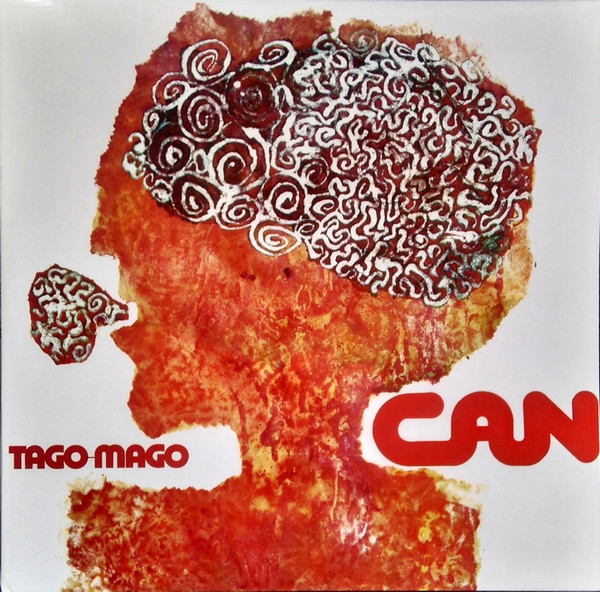
Can
Tago Mago
- Format
- Vinyl, LP, Album, Limited Edition, Reissue
- Label
- Spoon Records · SPOON 006/7
- Rating
- 10/10
Related titles
-
 Can Ege Bamyasi Ege Bamyasi was made immediately after Tago Mago — same band, same method, but more compressed and more accessible, the two albums as the two poles of what Can could do.
 -
 Neu! Neu! Neu! and Can were the two halves of the Krautrock moment that mattered most to electronic music — different answers to the same question about rhythm and repetition.
 -
 Roedelius Wenn Der Südwind Weht Roedelius's Cluster was part of the same Krautrock formation — he and Czukay both came through the Stockhausen orbit, and their paths crossed repeatedly through the '70s.
Holger Czukay studied under Karlheinz Stockhausen before helping found Can. Damo Suzuki was a street performer in Munich whom Malcolm Mooney’s replacement was found by chance — the band heard him busking and invited him to play that night. That contingency became one of the defining vocal instruments of Krautrock: Suzuki sang in Japanese, German, and invented language, phonemes treated as percussion rather than meaning.
Tago Mago (1971) is the record where the tape-edit approach Czukay had absorbed from Stockhausen became a pop method — extended improvised sessions cut and rearranged into something that sounds live but is constructed. Public Image Ltd, The Fall, Radiohead, and LCD Soundsystem all cite Can more than they admit; what they absorbed was the logic of the groove as a long, patient, evolving structure rather than a repeated unit. Can’s influence is underacknowledged because it arrives through intermediaries who don’t always know the source.