
A Tribe Called Quest
The Low End Theory
- Released
- 1991
- Format
- Vinyl, LP, Album
- Label
- Jive · ZL 74940
- Rating
- 10/10
Related titles
-
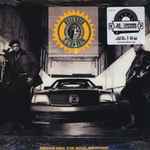 Pete Rock & C.L. Smooth Mecca And The Soul Brother Pete Rock was in the room when Q-Tip heard the "Jazz" beat — Mecca and the Soul Brother is the source water this record draws from.
 -
 J Dilla Donuts Dilla studied Low End Theory obsessively, and Donuts is where that inheritance was taken furthest — same vocabulary, abstracted past recognition.
Pete Rock tells the story without embarrassment. Q-Tip was at his house; the beat for what would become “Jazz (We’ve Got)” was already running when Pete left to answer the door. By the time he returned, Q-Tip had heard enough to rebuild it, note for note, from the same source elements. The track appears on The Low End Theory without a Pete Rock credit, and Pete has always been fine with this, because the point was never ownership. The point was the room.
What strikes me now, listening again, is how much this record trusts the bass. Ron Carter — Miles Davis’s bassist for the Second Great Quintet — plays on “Verses from the Abstract” because Q-Tip wanted “that straight bass sound” and decided the most direct path was hiring the man who had defined it in a different decade. The same musician, the same instrument, in a new room rather than a sample. Which is what hip-hop has always been at its most honest: lineage made audible, the original practitioners brought forward rather than quoted.
The album was tracked at Battery Studios in Manhattan on a Neve 8068 console that had been used by John Lennon. I don’t know whether Q-Tip knew this at the time, or whether it matters if he did. But The Low End Theory is already a record about inheritance — who hears a beat first, what it means to pass a vocabulary between hands. The console just makes the chain visible.