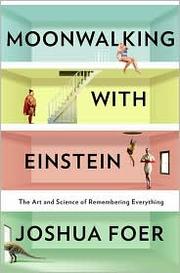
A lot more anecdotal than what I was expecting, albeit entertaining. It’s about 60% stories about the author’s time with various personalities in the memory circuit, 30% scientific research and case studies & the history of mnemonic techniques used by ancient philosophers and priests, and 10% applicable ways I can use these techniques in my day to day life. I was looking for the reverse of that, more like 10 anecdotes-30 history-60 science & application
Some takeaways: - the more senses you incorporate into a memory, the more meaningful and thus “memorable” it becomes. for example to memorise a shopping list, instead of rote memorising the words themselves, imagining the sour taste of an apple, the cold, smooth milk carton etc. will make a stronger imprint - humans have a much better sense of spatial memory than abstract memory, hence the popularity of the “memory palace” where one mentally places the things they want to remember in a place they are intimately familiar with (e.g. house they grew up in), and recall just involves a walkthrough of that place - forgetting is adaptive, and those with rare conditions where they remember “everything” actually don’t live very productive lives because they are lacking what John Vervaeke would call “relevance realisation” — the ability to distinguish useful information from everything else. everything is salient, therefore nothing is salient. - mnemonic techniques were first adopted by scholars and preachers before the invention of writing. good memory was a sign of good character because one could recite sermons and important texts of the time (everything was passed down orally). the gutenburg press came along and made memorisation a less crucial skill for most of us. today, most of our memories and knowledge are held externally in notebooks, photographs, books which is why those with the these now “extraordinary” memory skills are now relegated to niche communities like those described in the book. there were 1-2 chapters in the book that deviated from the authors journey to dive into this history which i appreciated. - creativity and memory are two sides of the same coin. much of the mnemonic techniques describes here involves assigning bizarre images to mundane things. you need to be able to think up really unique images here to be able to recall them - deliberate practice is much more effective than repetitive practice. an hour spent on addressing a progress blocker brings better results than 4 hours of general practice. being methodical in identifying what is blocking your progress and doubling down on that is key to improvement
The book does raise an interesting philosophical question of what it means to remember and why we might still want to use our biological brains to rather than relegating the task of remembering to external tools. The book ends with a rather bland retrospective of the author’s yearlong journey in the memory circuit. Basically, that although his ability to perform well on artificial memory tasks have improved, his working memory is still average, he still forgets where he puts his keys etc. This is because attention is a prerequisite to remembering, and unless we expend the energy to pay attention or creative work to form sensory associations to the things we want to remember, we’re back where we started.
All in all an interesting read on the science of memory and an entertaining inside look into the personalities involved in the competitive memory circuit. 3.5